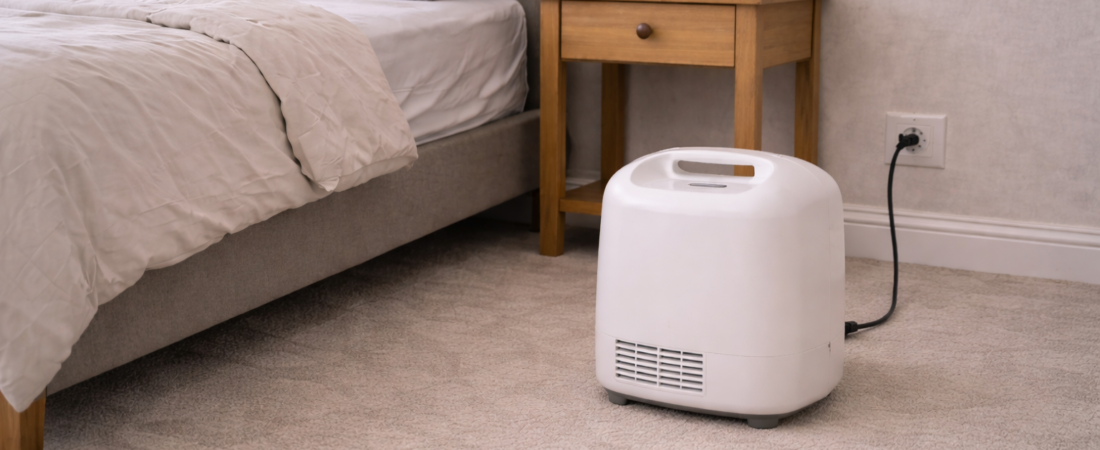
Many households rely on a single piece of medical equipment that must remain powered reliably.
This might include respiratory support, mobility assistance, monitoring, or therapy devices that are part of everyday life rather than emergency care.
Planning for medical power in single-device households is often simpler than it first appears, provided the focus stays clear and proportionate.
What Defines a Single-Device Household
A single-device household is one where:
-
Only one medical device is essential for continuity of care
-
Other household equipment can tolerate power loss
-
Medical needs are stable and predictable
This does not mean risk is low. It means planning can be more focused and specific.
Why Single-Device Planning Is a Distinct Case
Power planning becomes more complex as the number of dependent devices increases.
In contrast, single-device households can concentrate on:
-
One known electrical load
-
One continuity requirement
-
One set of operating behaviors
This clarity allows for calmer decisions and avoids unnecessary system complexity.
Understanding the Device’s Power Behavior
Effective planning starts with understanding how the device uses electricity.
Important considerations include:
-
Whether the device runs continuously or intermittently
-
Whether it is sensitive to sudden power loss
-
Whether it requires manual restart after interruption
These characteristics influence how critical uninterrupted power is during different types of outages.
Matching Planning to Likely Outage Scenarios
Not all outages pose the same level of concern for single-device households.
Short outages may require:
-
Prevention of abrupt shutdowns
-
Seamless continuity during brief interruptions
Longer outages may require:
-
Defined runtime expectations
-
Decisions about how long operation must be maintained
-
Awareness of recharging or replenishment limits
Planning should reflect the most likely scenarios rather than worst-case assumptions alone.
Avoiding Over-Engineering
Single-device households are sometimes encouraged to plan as if they were small facilities.
This can lead to systems that are costly, complex, or difficult to maintain.
Over-engineering often introduces:
-
More points of failure
-
Greater monitoring burden
-
Increased reliance on correct setup and operation
Appropriate planning focuses on reliability, not maximum capacity.
Simplicity as a Reliability Strategy
In many cases, simpler systems are easier to understand, maintain, and use correctly.
For single-device households, reliability often improves when:
-
The system is easy to operate
-
The number of components is limited
-
The response to power loss is predictable
Simplicity reduces the chance of confusion during an outage.
Recognising the Limits of Household Planning
Household power planning has boundaries.
It does not replace:
-
Medical advice
-
Manufacturer guidance
-
Professional electrical assessment
Single-device planning addresses electrical continuity only.
Decisions about medical care and equipment suitability remain separate.
When Planning May Need to Change
A household’s planning approach may need review if:
-
Additional medical devices are introduced
-
Equipment power requirements increase
-
Outage frequency or duration changes
-
Living arrangements change
Planning should be revisited when circumstances evolve, not treated as permanent.
How Single-Device Planning Fits Into Medical Power Reliability
Medical power reliability is about proportional planning.
For single-device households, this means:
-
Identifying what truly must remain powered
-
Understanding realistic outage risks
-
Choosing solutions that match actual needs
This measured approach helps maintain safety and continuity without unnecessary complexity.
Planning for a single essential device is one practical application of medical power reliability, which focuses on keeping critical equipment powered safely and predictably over time.
Planning With Confidence, Not Fear
Single-device households often have clearer needs than they realise.
By focusing on one device, one load, and one set of scenarios, planning becomes manageable and grounded.
Medical power reliability at this level is not about preparing for everything.
It is about preparing thoughtfully for what is most likely and most important.